


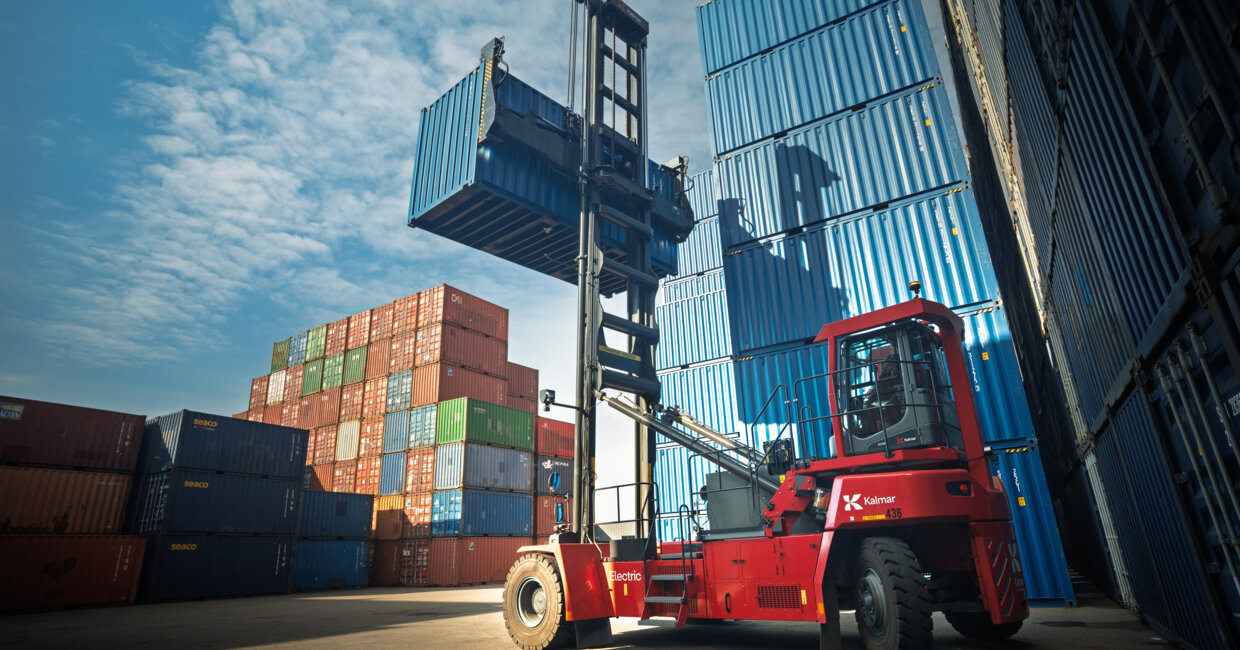
Empty container handlers for container handling: What you need to know
- Empty container handlers are specialised machines for moving and stacking empty shipping containers.
- Their ability to stack containers up to eight-high, or even 8+1 in some configurations, helps operators maximise storage capacity within existing yard footprints.
- Empty container handlers are used at container terminals, inland depots, rail terminals and intermodal facilities where large volumes of empty containers need to be stored and managed efficiently.
- Empty container handlers are available as both single and double stackers, with double stackers able to handle two empty containers simultaneously.
- Electric empty handlers help operators reduce local emissions, noise levels and energy consumption while maintaining productivity.
- Choosing the right empty container handler depends on factors such as container volumes, stacking requirements, yard layout, throughput demands and long-term operational goals.
Introduction
Empty container handlers have become a standard type of equipment at container terminals, inland depots and logistics hubs around the world. By combining high stacking capability with fast handling cycles, they help operators make better use of yard space and keep empty-container flows moving efficiently.
Today, empty handlers are used wherever large volumes of empty containers need to be stored, repositioned and retrieved quickly. Their high stacking capability and fast operating cycles make them an important part of modern container handling operations. To avoid possible confusion with other types of container handling equipment, empty container handlers may also be referred to as (empty) container top loaders, empty container stackers or empty container lifters. In different markets, local terminology varies, including Leercontainerstapler in German, manipulador de contenedores vacíos in Spanish and tyhjäkonttikäsittelijä in Finnish.
This article explains the role of empty container handlers in container logistics. We'll review how they work, where they are used, their key features and benefits, how they compare with other types of container handling equipment, and what factors to consider when selecting the right solution for your operation.
What is an empty container handler?
An empty container handler (ECH) is a specialised container handling machine designed specifically for lifting, transporting and stacking empty shipping containers. Compared with equipment built to handle loaded containers, an empty handler is optimised for the lighter loads and high handling volumes associated with empty container operations.
Empty container handlers are used wherever large volumes of empty containers need to be stored, moved and retrieved efficiently. High stacking capability and fast handling speeds make these machines well suited to dedicated empty-container storage operations.
A major benefit of empty container handlers is more efficient use of available yard space. Their high stacking capability allows operators to store more containers within the available yard area. In operations where thousands of empty containers may need to be stored, repositioned and retrieved every day, efficient storage and handling is essential to maintaining overall yard productivity. Fast lifting and lowering speeds help keep container flows moving efficiently, even in high-volume operations.
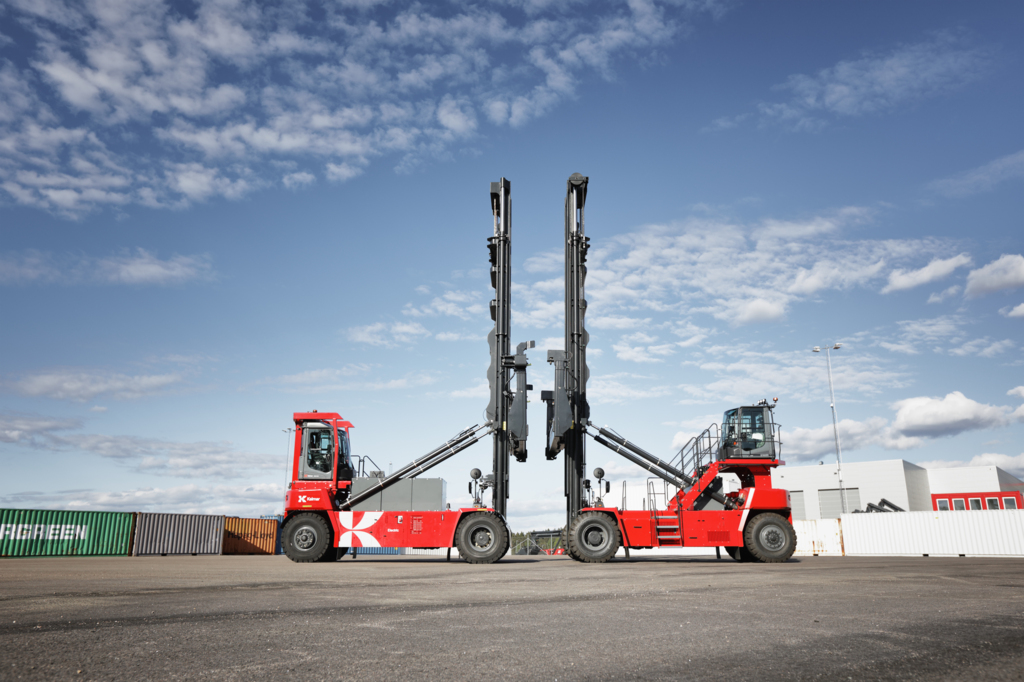
Empty container handlers are available in single- and double-stacker configurations. Single stackers handle one empty container at a time, while double stackers can lift and transport two empty containers simultaneously. Available stacking heights vary by model and configuration.
How does an empty container handler work?
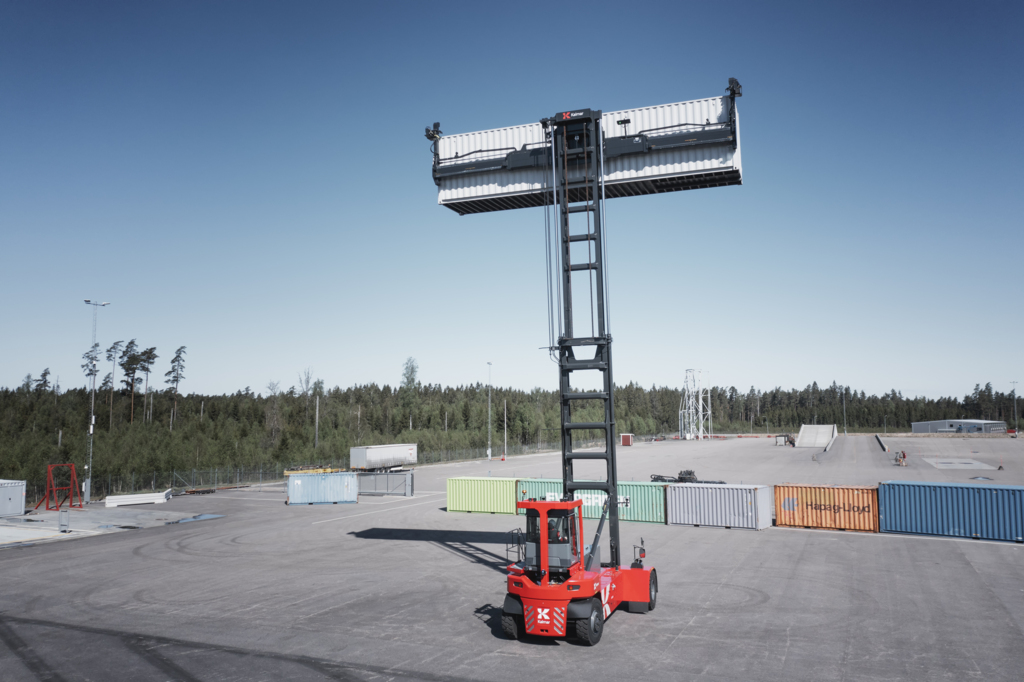
Empty container handlers use a mast and spreader system tailored to the dimensions and handling requirements of empty shipping containers. The spreader secures the container from the top, allowing the machine to lift, transport and stack containers quickly and accurately within the yard. The mast provides the vertical reach needed to build high stacks, while the machine’s hydraulics and controls support fast, stable and precise movement throughout the handling cycle.
Once secured, the container can be raised, transported to the required storage position and placed within the stack. The combination of vertical reach, manoeuvrability and controlled handling enables operators to create dense container stacks while retaining efficient access for subsequent retrieval and repositioning.
Modern empty container handlers are designed for intensive operating environments where productivity and uptime are critical. Advanced hydraulic systems, efficient driveline technologies and ergonomic operator controls help maximise lifting performance while maintaining smooth and precise handling, even when stacking containers at height.
Where are empty container handlers used?
Empty container handlers are widely used at ports, container terminals, inland depots, rail terminals and intermodal facilities where large numbers of empty shipping containers need to be stored and managed efficiently. They play an important role in global container logistics, helping operators store, sort, move and retrieve empty containers while making the most of available yard space.
Dedicated empty-container storage is a core application for this equipment. Empty containers arriving from imports often need to be inspected, cleaned, repaired, stored and made available for future export shipments. Efficient handling and storage of these containers helps maintain smooth container flows throughout the wider supply chain.
Empty container depots
Empty container handlers are a common sight at dedicated container depots, where shipping lines, leasing companies and container traders store and manage large container inventories. These facilities require equipment capable of handling high volumes of containers while maintaining efficient access to individual units.
A good example is Hamburg Container Service (HCS) in Germany, where between 300 and 500 empty containers arrive every day. Across its 125,000 m² depot, HCS performs around 3,000 container moves daily and has storage capacity for approximately 14,500 TEU. Empty container handlers are used to sort, store and retrieve containers efficiently while supporting inspection, cleaning and repair operations.
Container terminals
Container terminals often need to manage large flows of empty containers alongside loaded container operations. Dedicated empty container handling equipment helps operators maximise storage capacity, maintain efficient yard operations and avoid congestion as container volumes fluctuate.
At Port of Lagos in Nigeria, improvements to container handling operations were driven by the need to increase throughput and improve efficiency at one of the country's busiest ports. Efficient movement and storage of containers plays a critical role in supporting terminal productivity and ensuring containers remain available when needed for onward transport.
Similarly, operators such as Star Container Services in Rotterdam have invested in empty container handlers to support terminal expansion projects and growing container volumes, highlighting the continued importance of dedicated empty container handling equipment in major logistics hubs.
Inland depots and intermodal facilities
Empty container handlers are also widely used at inland container depots, rail terminals and intermodal logistics hubs. These facilities act as important links between ports, rail networks and inland customers, often handling significant volumes of empty containers that need to be stored, repositioned and dispatched efficiently.
Their ability to stack containers several containers high while maintaining fast access to individual units helps operators maximise storage density without expanding their yard footprint. This makes empty container handlers particularly valuable in locations where available space is limited and operational efficiency is critical.
Whether operating in a major seaport, a dedicated container depot or an inland logistics hub, empty container handlers help ensure that empty containers remain organised, accessible and ready for their next journey through the global supply chain.
What are the benefits of empty container handlers?
Empty container handlers offer a range of operational benefits for container terminals, depots and logistics hubs. Most importantly, they are specifically designed for handling large volumes of empty containers efficiently, helping operators maximise storage capacity while maintaining smooth container flows.
Maximising yard capacity
One of the biggest advantages of an empty container handler is its ability to make the most of available yard space. Because empty containers weigh significantly less than loaded containers, they can be stacked to greater heights, allowing operators to increase storage density without expanding the yard footprint. Depending on the machine and configuration, empty container handlers can typically stack containers from three-high to eight-high, while some double-stacker models can achieve stacking heights of up to 8+1. This is particularly valuable where yard space is limited and container volumes are growing.
High productivity in busy container yards
Empty container handlers are purpose-built for moving and stacking empty containers quickly and efficiently. Fast lifting and lowering speeds, dedicated empty-container handling designs and the availability of single and double stacker configurations help operators maintain smooth container flows and reduce unnecessary handling movements in high-volume operations.
Operational flexibility
The same core handling capabilities can support a range of operating environments and changing container volumes. Efficient storage, retrieval and repositioning give operators the flexibility to respond to fluctuating container volumes and changing operational needs.
Improved operator experience
Operator comfort, visibility and ease of use are important considerations in today’s empty handlers. Features such as ergonomic cabins, intuitive controls and excellent visibility help operators work safely and efficiently throughout long shifts. Kalmar's EGO cabin, available across multiple handler models, is designed to provide a comfortable working environment while supporting precise and productive container handling.
Supporting sustainability goals
As terminals and logistics operators work to reduce emissions, electric empty container handlers are becoming an increasingly attractive alternative to conventional equipment. Electric models can deliver the same handling and stacking capabilities while helping operators reduce emissions at source, lower noise levels and improve energy efficiency.
Lower operating costs over time
Lifecycle efficiency of an empty container handler depends on factors such as driveline technology, energy consumption, maintenance accessibility and equipment availability. Advances in driveline technology, energy efficiency, maintenance accessibility and platform standardisation help reduce operating costs while maximising equipment availability. Together, these factors can contribute to a lower total cost of ownership over the life of the machine.
What are the key features of modern empty container handlers?
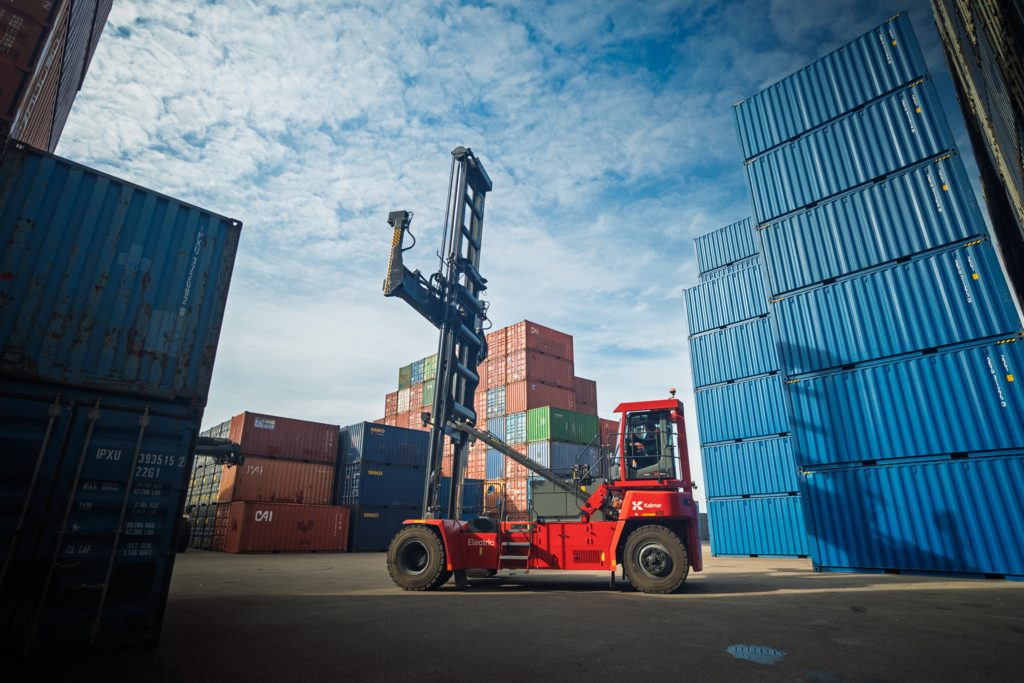
Today’s empty container handlers combine features that support productivity, storage density, safety and operational efficiency. These commonly include:
- High stacking capability: Empty container handlers can typically stack containers from three-high to eight-high, with some double-stacker configurations capable of stacking up to 8+1 high. This helps operators maximise storage density within the available yard footprint.
- Single and double stacking options: Single stackers provide flexibility across a wide range of applications, while double stackers can handle two empty containers simultaneously to improve productivity in high-volume operations.
- Ergonomic operator cabins: Modern cabins are designed to provide excellent visibility, intuitive controls and a comfortable working environment that supports productivity during long shifts.
- Advanced safety features: Camera systems, radar-based detection, pedestrian warning systems and enhanced visibility solutions help improve safety in busy container handling environments.
- Connected fleet management: Digital solutions allow operators to monitor equipment utilisation, analyse performance and plan maintenance activities more effectively.
- Electric powertrains: Electric empty container handlers offer zero emissions at source, lower noise levels and improved energy efficiency, helping operators support their decarbonisation goals.
How to choose the right empty container handler?
Selecting the right empty container handler starts with understanding the needs of the operation, including container volumes, throughput requirements, available yard space, operating hours and long-term business objectives. The best solution is not necessarily the machine with the highest stacking height or lifting capacity, but the one that best fits the facility’s operational requirements while delivering value throughout its lifecycle.
The relative importance of these factors varies by application. A dedicated empty container depot may place greater emphasis on storage density and container retrieval, while a busy container terminal may prioritise throughput, equipment availability and smooth container flows. Inland depots and intermodal facilities often need to balance capacity, flexibility and productivity.
Consider your storage and stacking requirements
The selection process should begin with the required storage capacity and available yard area. Operations with high container volumes and limited storage areas typically benefit from higher stacking configurations, while lower stacking heights may be sufficient where space constraints are less critical.
The highest possible stack is not automatically the best choice. Operators also need to consider how containers are organised, how frequently they must be retrieved or repositioned and how the selected stacking configuration will affect daily yard operations. The appropriate solution therefore balances storage density with container accessibility and operational efficiency.
Choose between a single and double stacker
The choice between a single and double stacker depends on container throughput, yard layout and how consistently the operation can make use of simultaneous two-container handling.
Single stackers handle one empty container at a time and offer flexibility across a wide range of container depots, terminals and logistics facilities. Double stackers can lift and transport two empty containers simultaneously, reducing the number of handling cycles when operating conditions allow this capability to be used effectively.
The decision should therefore be based not only on maximum handling capacity, but also on container flows, stack organisation and day-to-day yard processes. These factors determine which configuration provides the best operational fit.
Choose the right power source
The choice between diesel and electric equipment depends on the operating environment, available infrastructure, working patterns and the organisation’s long-term sustainability objectives.
Electric empty container handlers are designed to deliver the same lifting performance, stacking capability and productivity as their diesel counterparts while producing zero tailpipe emissions. They also offer lower noise levels and can help reduce energy and maintenance costs over the equipment lifecycle.
However, operators need to consider whether suitable charging infrastructure is available or can be installed, and whether charging can be integrated into daily operating schedules. Local energy costs, operating hours, emissions targets and the availability of service support can also influence the business case.
Diesel-powered machines remain a popular choice for many operators, particularly where charging infrastructure is not yet available or operational requirements favour conventional powertrains.
Look beyond the purchase price
The purchase price is only one part of the investment decision. The total cost of ownership is also influenced by the machine’s operating costs, productivity, availability and retained value throughout its lifecycle.
Key factors to consider include:
- fuel or energy consumption;
- maintenance requirements;
- equipment uptime and availability;
- operator productivity;
- service support and parts availability;
- asset lifespan; and
- residual value.
A machine with a higher upfront cost may ultimately prove to be the more economical choice if it delivers lower operating costs, higher productivity and greater equipment availability. Equipment that enables faster container handling or more effective use of the available yard space can also create value by improving the efficiency of the wider operation.
Plan for future growth
The selected machine should support not only current operating requirements but also anticipated changes in container volumes, customer needs and sustainability expectations.
Operators should consider whether the equipment can support future capacity requirements, digital fleet management capabilities and potential electrification strategies. Planning for these developments at the selection stage can help ensure that the machine remains well suited to the operation throughout its working life.
Overall, the right empty container handler is the one that provides the best fit between storage capacity, throughput, yard conditions, power requirements and lifecycle economics—both for the operation today and for its expected future needs.
The future of empty container handling
The future of empty container handling will be shaped by three closely connected trends: electrification, digitalisation and the growing demand for more efficient use of available yard space. As global container volumes continue to grow and sustainability expectations increase, operators are looking for solutions that can improve productivity while reducing environmental impact.
Electrification is already transforming the container handling industry. Modern electric empty container handlers are designed to deliver the same lifting performance, stacking capability and productivity as conventional diesel-powered machines while producing zero emissions at source, lower noise levels and improved energy efficiency. As battery technology and charging infrastructure continue to evolve, electric equipment is expected to play an increasingly important role in container terminals, depots and logistics hubs around the world.
At the same time, connected technologies are providing operators with greater visibility into fleet utilisation, equipment performance and maintenance requirements. Access to real-time operational data can help improve equipment availability, support proactive maintenance and enable more informed decision-making across container handling operations.
While technology continues to evolve, the fundamental challenge remains the same: moving, storing and retrieving large volumes of empty containers as efficiently as possible. Empty container handlers will continue to play a vital role in addressing this challenge by helping operators maximise yard capacity, maintain smooth container flows and support the efficient movement of containers throughout the global supply chain.
Find out more about Kalmar’s range of empty container handlers
Related articles
Further reading
Subscribe and receive updates in your email
Meld je aan voor onze publicaties